How Much Do Plumbers Charge to Install a Water Filtration System in Hermosa Beach?
Installation labor is usually the part of the bill people worry about most, so here is how it works with us and what still moves the number.
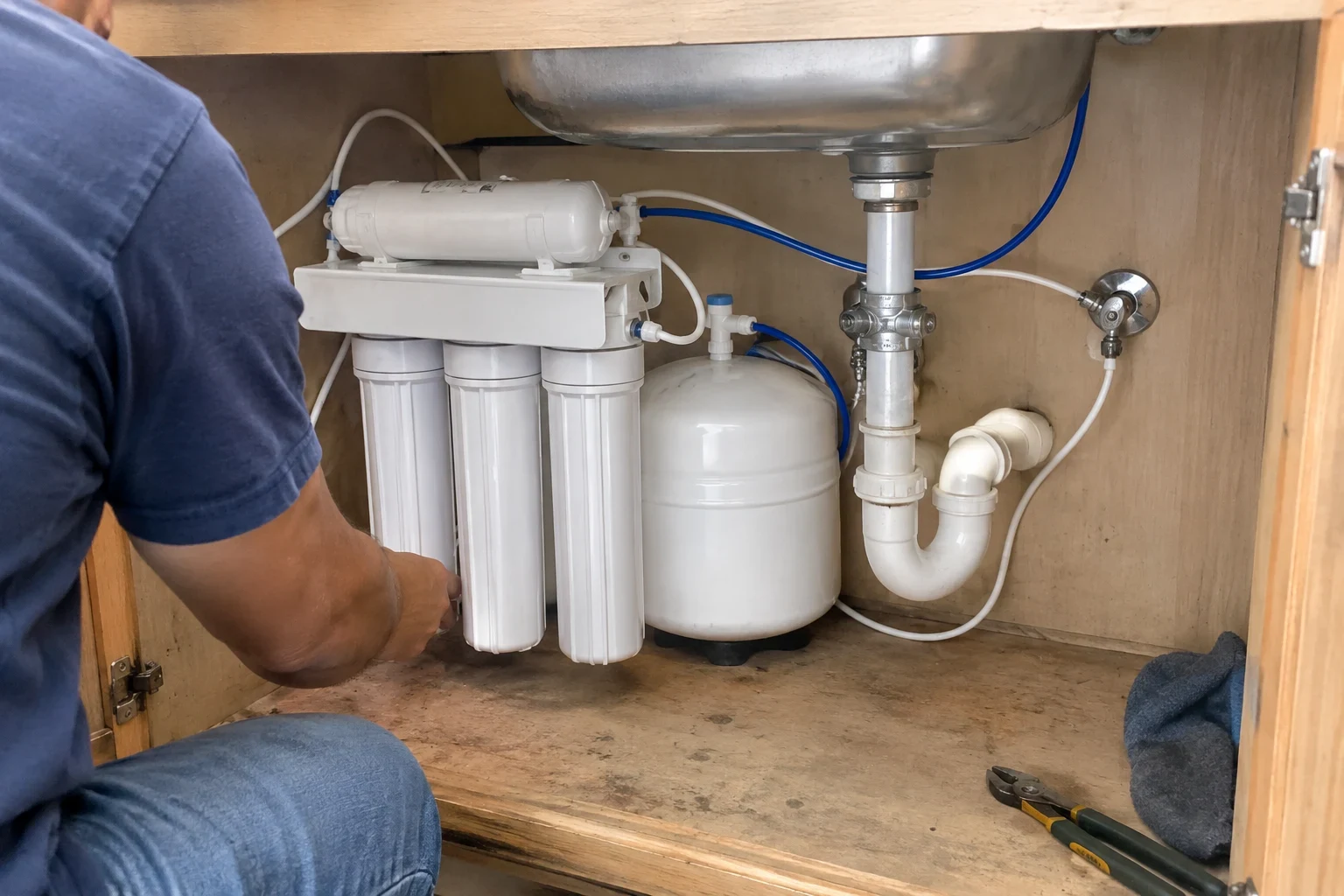
How much do plumbers charge to install a water filtration system?
With us, installation costs you nothing: we offer free install on our systems, and we cover the cost. What you pay for is the system itself. Your total can shift if your home needs plumbing corrections first, such as a seized shutoff valve or a missing drain connection. Get your quote by phone at (310) 388-3869.
What installers usually bill for, and what we cover
When a plumber quotes an install, the labor line normally bundles several things: the trip to your home, time under the sink or at the water line, fittings and supply tubing, drilling for a dedicated faucet, and tying the system into a drain. Those pieces add up, and they vary a lot depending on how the space is laid out.
Our offer is simple. Free install (we cover the cost). That covers the standard work of mounting the unit, connecting it to your cold water supply and drain, and checking every joint for leaks before we leave. You are paying for the equipment, not the hours it takes to put it in.
What can still change the total for your home
Most installs are straightforward. A few conditions add parts or extra plumbing work, and we point them out on the phone or when we see the space, before anything is done.
Near the coast, salt air is hard on exposed brass and chrome. Angle stops under older sinks often corrode until the handle will not turn, and a valve that will not close cannot safely feed a filter.
- Shutoff valves that are seized, weeping or corroded and need replacing before a feed adapter can go on
- Older galvanized or patched supply lines that do not have a clean place to connect
- No usable drain tailpiece, or a P-trap layout that leaves no room for a drain saddle
- Stone or quartz countertops, which take a slower diamond bit to drill a faucet hole than laminate does
- Low incoming water pressure, which can call for a booster pump on a reverse osmosis unit
- No nearby outlet for systems with an electric control valve
Reverse osmosis vs dual tank: how the install differs
A reverse osmosis system lives under your kitchen sink. We fit a feed water adapter on the cold line, clamp a drain saddle onto the tailpiece above the trap, mount the cartridge housings and storage tank, and run tubing to a dedicated faucet. The membrane pushes water through very fine pores, so it needs steady pressure and a drain for the reject water. That is why pressure and drain layout matter so much for this one.
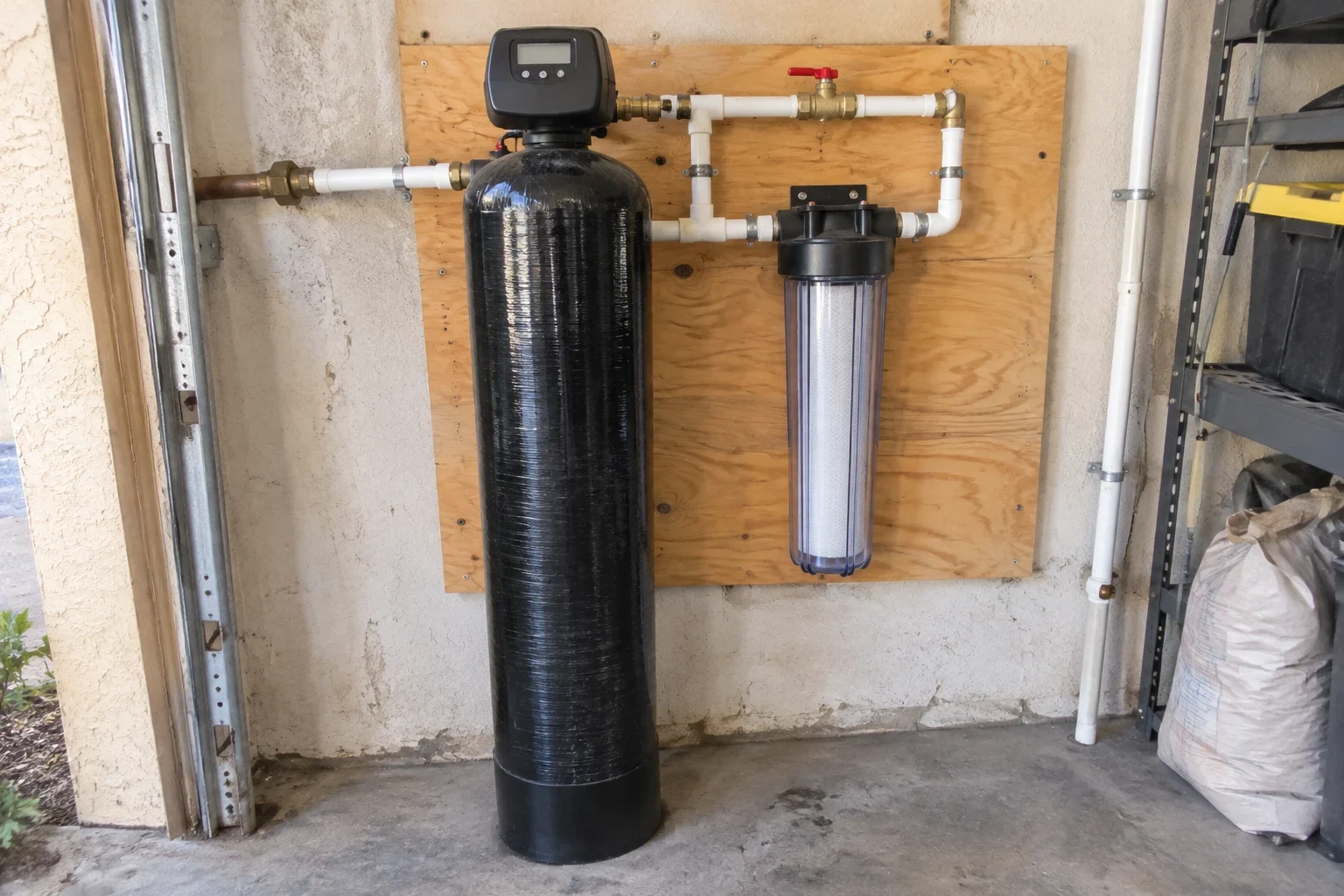
A dual tank system is larger and is installed where your water line can be routed through both tanks, with a bypass valve so you can isolate it for service. The control head runs regeneration cycles, so it needs a drain line and usually a power outlet. Free salt provided to tank upon install, so the system is ready to run the day we finish.
Our city water filtration setups sit between these two in complexity. The right choice depends on what you want to fix, whether that is the taste of tap water at the kitchen sink or something affecting more of your home.
What you will spend after the install
The install happens once. Upkeep is the cost that repeats, and it is worth knowing before you choose a system. Reverse osmosis uses sediment and carbon prefilters that are commonly changed about once or twice a year, plus a membrane that lasts longer. A dual tank system mainly needs salt added to the brine tank as it gets used.
How fast cartridges load up depends on how much water your household draws and what is in the supply. We explain the change schedule for your unit when we finish, so nothing about upkeep comes as a surprise.
If an old filter just leaked or failed
A cracked housing or a popped push-fit connection can soak a sink cabinet quickly. Close the cold water angle stop under the sink first, or the main shutoff if that valve will not turn. Then pull everything out of the cabinet and let it dry with the doors open.
Take a few photos of the failed part and the cabinet floor before you throw anything away. Particleboard cabinet bottoms swell when they stay wet, and photos help if you need to talk to your insurer. When you call us, tell us what broke and where. We will explain whether a replacement can go into the same spot or whether the valve or drain connection needs attention first.
- Shut off the water feeding the unit
- Clear and dry the cabinet
- Photograph the failed part and any damage
- Call to plan the replacement install
More questions about installation
Something not covered here? (310) 388-3869
Do I need a permit to install a water filter?
A typical under-sink reverse osmosis unit is usually treated as a fixture connection, not a plumbing alteration. Work that reroutes your main water line can be different, and we tell you up front if your job falls into that category.
How long does an install take?
Most under-sink reverse osmosis installs take a few hours, including drilling the faucet hole and leak checks. A dual tank system takes longer because of the bypass, drain line and first setup of the control valve.
Can I install a reverse osmosis system myself to save money?
Since we cover the install cost, doing it yourself saves little. The common DIY problems are a drain saddle placed below the trap, which can pull wastewater back toward the unit, and push-fit tubing that is not fully seated and leaks days later.
Find out what your install involves
Tell us which system you are considering and what is under your sink or where your water line comes in. We will explain the setup, flag any plumbing that needs attention first, and give you your quote by phone.