ServicesCity Water Filtration
City Water Filtration for Hermosa Beach Homes
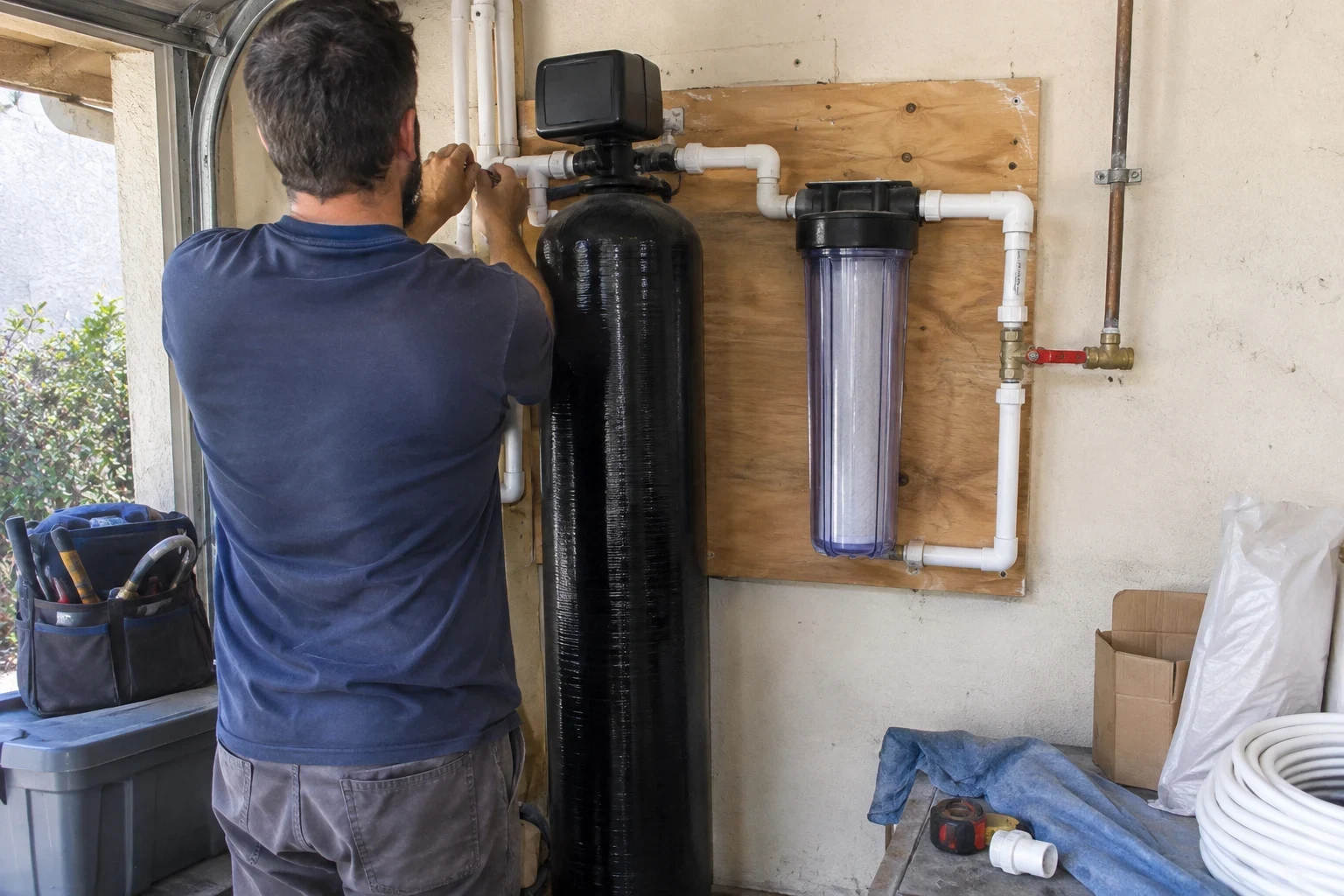
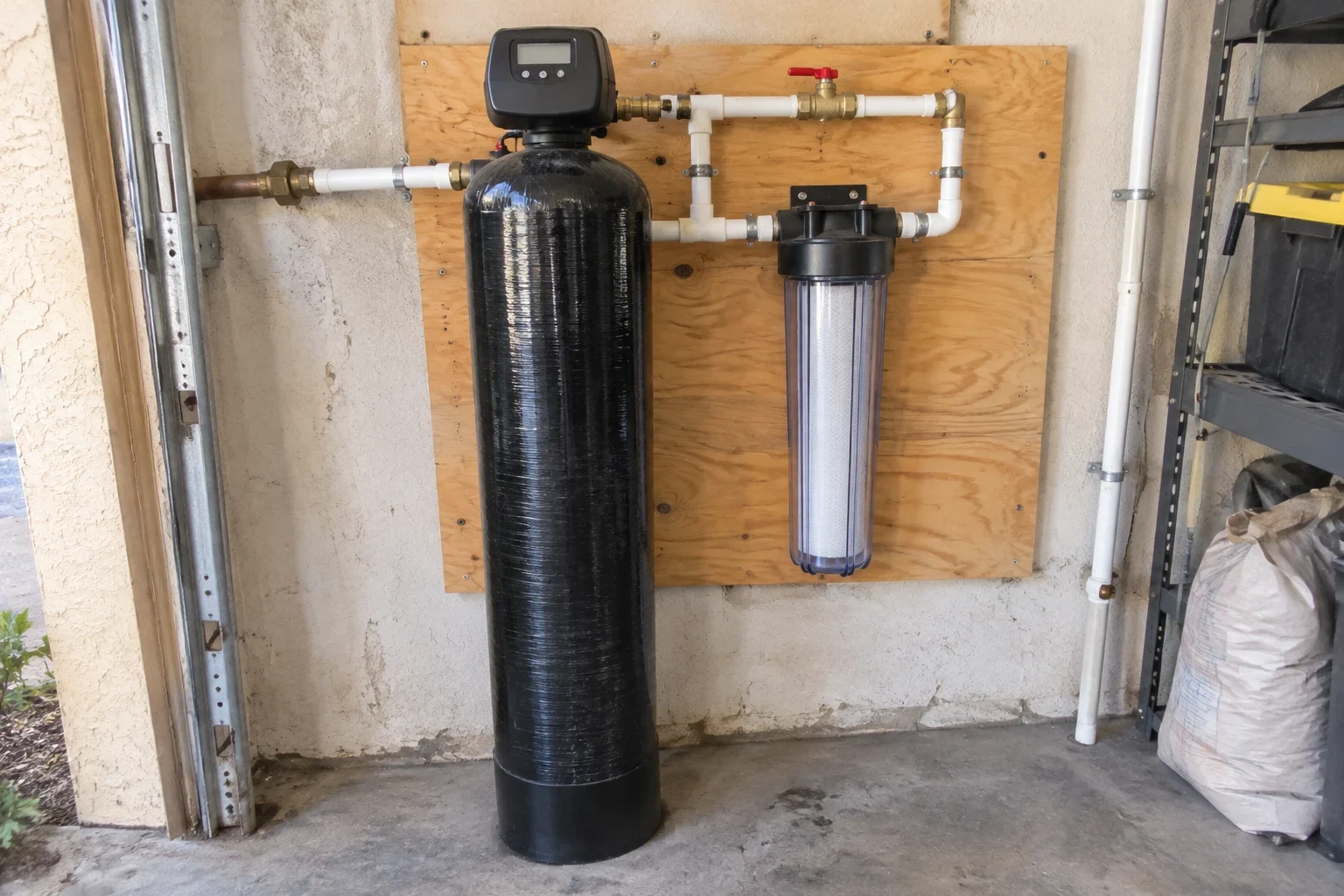
Tap water from the city is safe, yet the disinfectant that protects it can leave a chemical smell and taste behind. We put a sediment prefilter and a catalytic carbon tank at the point where your main line comes into the house, so every faucet runs cleaner-tasting water at full pressure.
How a city water system works, and why
Water utilities add a disinfectant so the supply stays safe across miles of pipe. A lot of Southern California suppliers rely on chloramine, chlorine bonded to ammonia, which holds up in the lines longer than chlorine alone. That durability protects public health, and it is also the reason the taste shows up in your coffee and the odor hangs around in a hot shower.
Ordinary activated carbon removes free chlorine well but struggles with chloramine. We use catalytic carbon, a media with a treated surface that breaks the chloramine bond far more quickly, in a tank big enough that water stays in contact with it long enough. Ahead of the tank, a sediment cartridge stops rust flakes, sand and pipe scale before they get to the carbon or your fixtures.
This setup proves its worth when something sudden happens. A water main break, repairs on a nearby line or a heavy storm that churns up the distribution system can send a rush of discolored water to your taps. The prefilter absorbs it, and you change a single cartridge rather than scrubbing every aerator and toilet valve in the house.
What the installation includes
Sediment prefilter housing
A clear or opaque housing with a pleated cartridge, typically 5 micron, mounted first in line. It protects the carbon bed from clogging and shows you at a glance when debris has come through.
Catalytic carbon tank
The main stage. Tank size is matched to your peak flow so the media has the contact time it needs to reduce chloramine instead of letting water rush past.
Bypass and shutoff valves
A three-valve bypass goes in alongside the system. Turn two handles and water routes around the tank, so a cartridge swap or repair never leaves your home without running water.
Pressure gauges before and after
Two gauges let you read the pressure drop across the system. A widening gap is the simplest sign the prefilter needs changing.
A proper main-line connection
Our plumbers make the cut-in where your main enters, using the right fittings for copper, PEX or older galvanized pipe so the joints stay tight for years.
Warranty coverage
Every unit we install comes with a free 3-year warranty on all units, covering the equipment we put in your home.
Signs your city water needs filtering
- A pool or chemical smell
- You notice it most in the shower, where hot water releases the disinfectant into the air. It is a taste and comfort issue, and carbon addresses it directly.
- Brown or cloudy water after line work
- Main breaks and hydrant flushing shake loose sediment that has settled in the pipes. If it shows up in your sinks more than once, a prefilter will catch the next round.
- Clogged aerators and slow fixtures
- Grit in faucet screens and showerheads means particles are already moving through your plumbing and settling where they restrict flow.
- Coffee and tea taste off
- Chloramine reacts with the compounds in brewed drinks. Many people only realize how much once they taste the same beans on filtered water.
- Older pipes in your home
- Galvanized steel sheds rust flakes as it ages. A sediment stage protects appliances and fixtures until you decide what to do with the piping.
How the job runs on install day
- 1
Phone conversation first
You tell us the size of your home, the number of bathrooms and what bothers you about the water. We often pull up your supplier's annual water quality report together so the recommendation is based on what your utility actually adds.
- 2
Locate the main and plan the cut-in
We find where the line enters, usually near the hose bib or the water heater, and check the pipe material and space for the tank and housings.
- 3
Shut off, cut in and mount
Water is off for a short stretch while we install the bypass, prefilter housing, tank and gauges. Drop cloths go down wherever we work inside.
- 4
Flush and check
We backflush the new carbon until it runs clear, check every joint for leaks and read both gauges so you have a baseline pressure.
- 5
Walkthrough and cleanup
We show you how to work the bypass and change the cartridge, then haul away packaging and cut pipe.
What moves the price
Because we offer free install (we cover the cost), your quote is mostly the equipment and parts your home calls for. Every line is explained before we order anything. These four factors shape the number most.
- Home size and peak flow
- More bathrooms means more water moving at the same moment. That calls for a larger carbon tank so contact time and pressure stay where they should be.
- Which carbon, and how much
- Catalytic media is priced above ordinary activated carbon because of the surface treatment that lets it break down chloramine. A larger bed adds to the upfront cost but runs longer before it needs replacing.
- Pipe material at the main
- Galvanized lines may need transition fittings, or a short section swapped out, to make a sound connection.
- Location and access
- An outdoor main with open wall space is straightforward. A tight garage corner or a line buried in a slab adds parts and time.
City water filtration questions
- Does this remove chloramine or just chlorine?
- Both, because we use catalytic carbon rather than standard carbon. Ordinary carbon reduces free chlorine quickly but needs far more contact time for chloramine. Catalytic media and a properly sized tank close that gap.
- Will a filter make my water safe during a boil-water notice?
- No. Follow the utility's notice until it is lifted, because a carbon system is not designed to disinfect. Once the notice ends, run your taps to flush the lines and check the prefilter, since that is when sediment tends to arrive. Changing the cartridge at that point is a sensible step.
- Will I lose water pressure?
- A correctly sized system causes only a small, steady drop you are unlikely to notice. Pressure falls noticeably when the prefilter loads up with debris, which is why we install gauges on both sides.
- How often does anything need replacing?
- The sediment cartridge is the frequent part, usually every few months, or sooner after a main break. The carbon bed lasts much longer and depends on your household's water use.
- Do I still need reverse osmosis for drinking water?
- Not for taste. Carbon handles that. Some people add reverse osmosis at the kitchen sink for an extra stage on cooking and drinking water, and the two systems work well together.
- What is covered if something fails?
- We provide a free 3-year warranty on all units. If a part of the equipment we installed fails in that period, get in touch by phone and we will sort it out.
Get a system sized for your water
Give us a quick picture of your house, how many bathrooms it has and what bothers you at the tap, and we will match a tank size and media to it. If a recent main break or storm sent grit through your lines, say so and we will plan the prefilter around it.