ServicesWhole Home Water Filtration
Whole Home Water Filtration in Hermosa Beach
We install a sediment prefilter and a carbon media tank where the water main enters your home, so every faucet, shower and appliance gets filtered water. The system sits on a bypass loop, and our licensed plumbers size it to your actual flow.
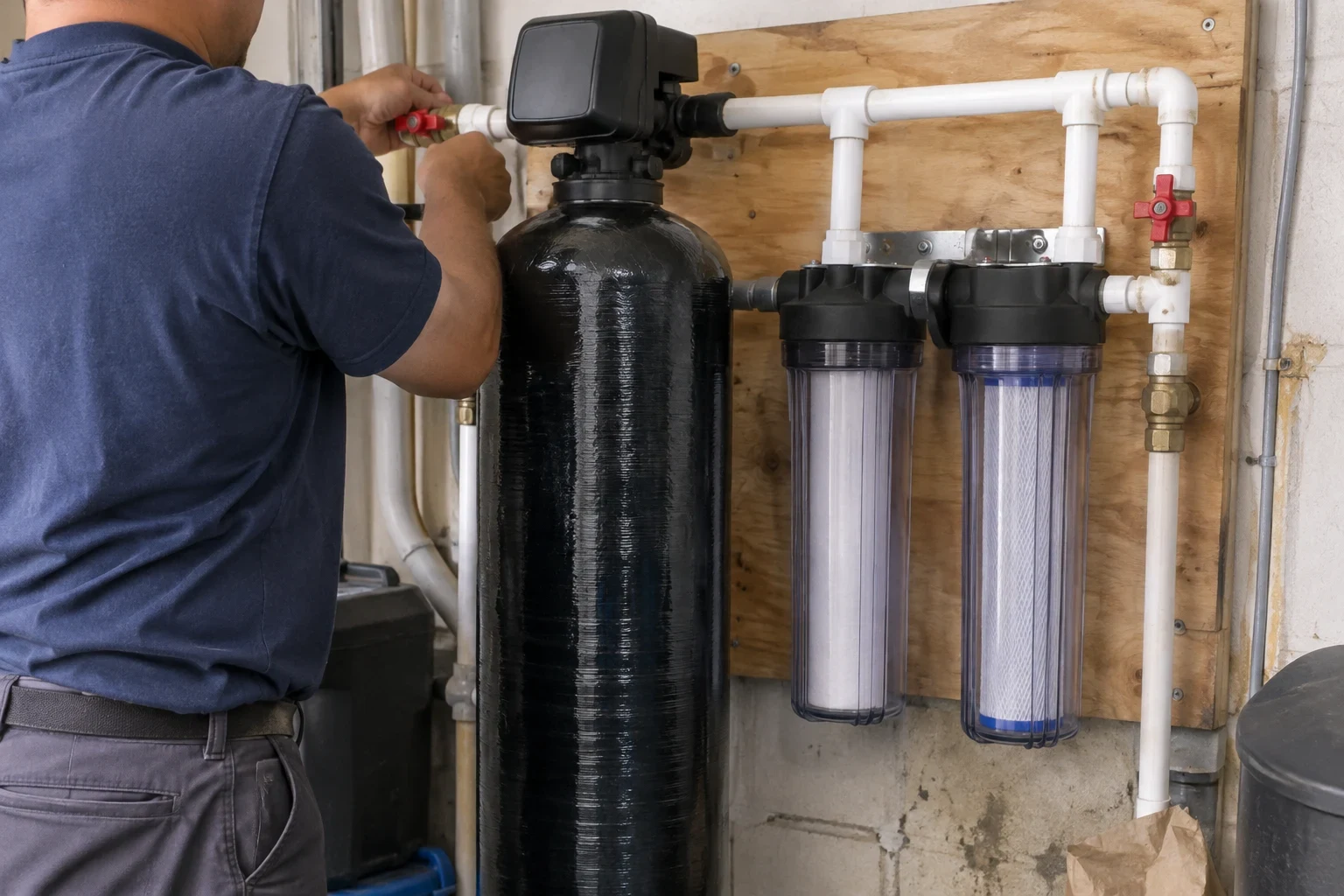
What a Point-of-Entry System Does
A whole home filter treats water once, at the main line, before it splits to your water heater and fixtures. That is the difference from a kitchen unit. The chlorine or chloramine smell leaves the shower, not just the drinking glass, and grit is caught before it reaches valve cartridges and appliance inlet screens.
Our standard setup has two parts. A 5-micron sediment prefilter takes out sand, rust flakes and pipe scale. Behind it, a tank of catalytic carbon removes disinfectant taste and odor. Plain carbon handles chlorine well, but chloramine needs the longer contact time and surface chemistry of catalytic media, so we size the tank for that.
It is also the part of your plumbing that earns its keep after a disruption. When a main break or line repair on your street stirs up sediment, the prefilter catches it at the door instead of letting it settle in your tank-style water heater or a dishwasher valve.
What the Installation Includes
Three-valve bypass loop
We plumb inlet, outlet and bypass valves so you can isolate the system for a filter change or keep water flowing if anything needs service. No one has to shut off the whole house to swap a cartridge.
Sediment prefilter housing
A clear or opaque housing with a 5-micron cartridge sits ahead of the carbon tank. It protects the media from clogging, which keeps pressure steady and lets the carbon last longer.
Catalytic carbon media tank
The tank is sized to your peak flow in gallons per minute, not just the number of people in your home. An undersized tank lets water pass too fast for the carbon to do its job.
Pressure gauges before and after
Gauges on each side of the prefilter show the pressure drop across the cartridge. When the gap widens, you know it is time for a new one without guessing.
Code-compliant connections
We make the tie-in on copper or PEX, add dielectric fittings where dissimilar metals meet and keep the bonding path for your electrical ground intact. Every joint is checked under pressure before we close up.
Signs Your Home Needs Filtration at the Main
Chlorine smell in the shower
If you notice the pool smell when the hot water runs, a kitchen filter will not help. Heat releases disinfectant into the air, so the treatment has to happen before the water heater.
Grit in aerators and screens
Sand or black specks in faucet aerators, washer inlet screens or showerheads mean sediment is moving through your lines. A prefilter stops it at one point you can service.
Brown water after line work
Discolored water after a nearby main repair or a pressure surge from heavy rain usually means loosened sediment. If it keeps coming back, a whole home prefilter limits how much reaches your fixtures.
Different taste at different taps
When the kitchen tastes fine through an under-sink unit but bathroom and fridge water do not, treating the whole house is the simpler fix.
From First Call to Filtered Water
- 1
Start with what you notice
On the phone, describe the smell, taste or grit you are seeing, how many bathrooms your home has and roughly where the main line comes in. From that, we tell you whether a point-of-entry system makes sense or whether Reverse Osmosis under the kitchen sink would cover it.
- 2
Choosing the cut-in point
The system goes on the main after the shutoff valve and ahead of the branch that feeds the water heater. Exposed copper at coastal homes often carries corrosion from salt air, so we inspect the pipe before we cut.
- 3
Setting the loop and tank
With the main off, we cut in the bypass valves, hang the prefilter housing and set the media tank level on a solid base. Water is shut off only for the tie-in, and most jobs wrap up within part of a day.
- 4
Flushing and handoff
Fresh carbon sheds fine dust, so we backflush it before water reaches your fixtures. We check each joint for drips, read both gauges with water running and show you how the bypass works and how to swap the cartridge.
What Sets the Price
We offer free install (we cover the cost), so the figure you get by phone is mostly the equipment itself. That figure rises or falls with system size and the media your water calls for. We go through each line with you before anything goes on the calendar.
- Demand at peak hours
- We size the tank to how many fixtures run at the same moment, such as two showers and the washer on a busy morning. A tank matched to that demand holds your pressure. One that is too small starves fixtures and rushes water past the carbon.
- Carbon grade
- Catalytic carbon is priced above standard carbon. Standard media handles chlorine, but when the supply carries chloramine, the catalytic grade is what actually removes it.
- Main line diameter and material
- Valves and fittings for a 1-inch main cost more than those for a 3/4-inch line. If the tie-in point has an old galvanized section, that piece may need to come out.
- Additional stages
- A finer prefilter or a second cartridge housing adds to the total. We bring one up only when the amount of grit you describe justifies it.
Questions About Treating Water at the Main
Something not covered here? (310) 388-3869
Will my shower pressure drop once the system is in?
With a tank sized to your peak flow, the loss under normal use is slight. A big drop usually points to an undersized tank or a sediment cartridge that has loaded up with grit. Reading the two gauges shows which one it is, and swapping the cartridge typically brings pressure back.
Which parts wear out, and when?
The sediment cartridge is the frequent one, usually every few months and sooner if your lines shed a lot of particles. The carbon media lasts far longer, and its life tracks the total gallons that pass through the tank. Before we leave, we give you a replacement timeline based on the tank we installed and how many people live in your home.
Is there a warranty on the equipment?
Yes. All units we install come with a free 3-year warranty. If a covered part fails during that time, phone us and we will handle it.
Can I rely on it during a boil-water notice?
No. Sediment and carbon stages improve taste and trap particles, but they do not disinfect water. Follow the utility's instructions, and once normal service is back, put in a fresh prefilter cartridge.
Should I add a unit under the kitchen sink too?
Plenty of homes are well served by the whole home system on its own. If you want another stage just for drinking and cooking water, Reverse Osmosis at the kitchen sink works well alongside it.
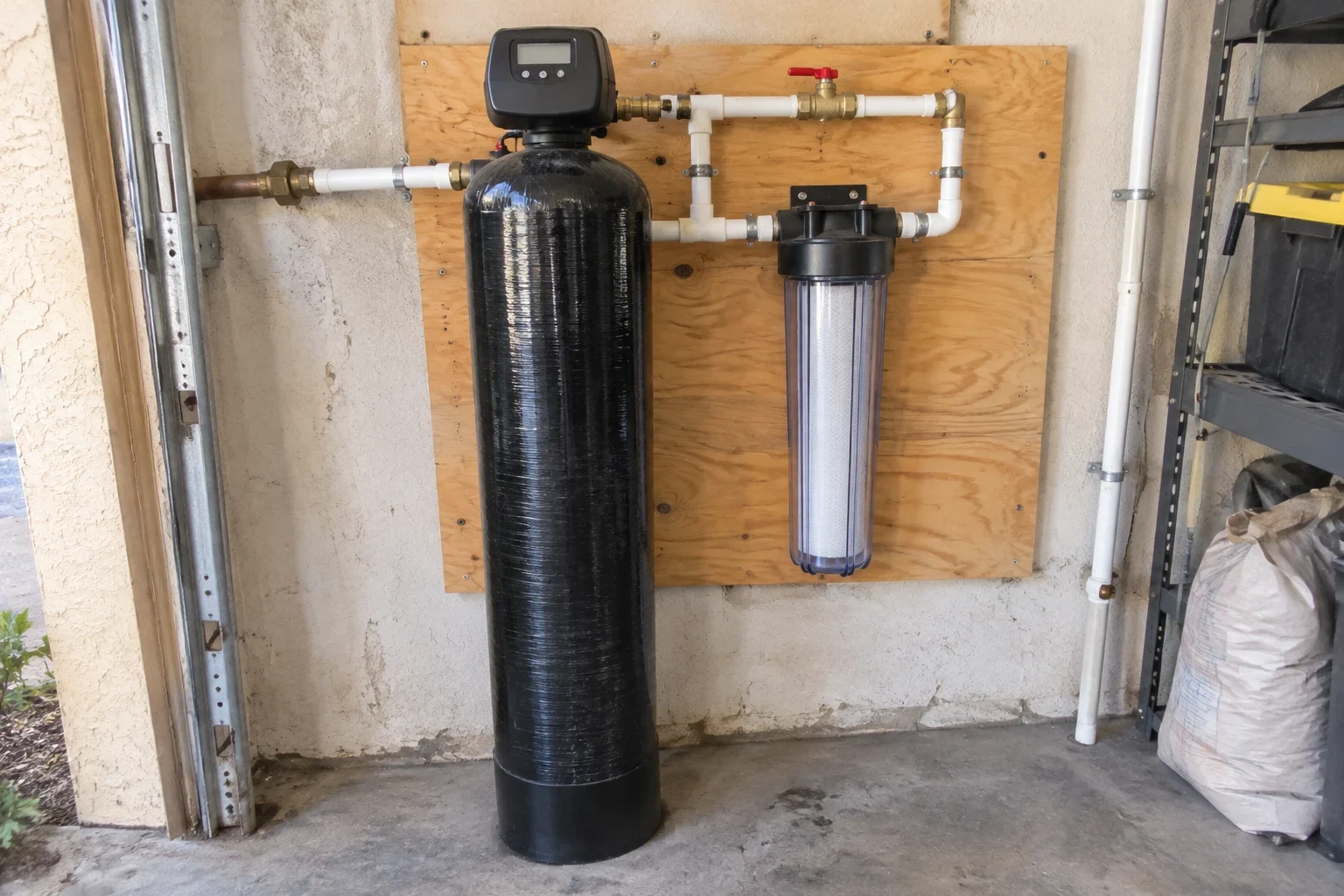
Filtered Water From Every Faucet
Give us a rough count of bathrooms and describe the smell, taste or grit that bothers you. From there we explain which tank size and carbon grade suit your main line, and how the tie-in day goes.