ServicesReverse Osmosis
Reverse Osmosis Systems in Hermosa Beach
Our reverse osmosis systems mount in the cabinet below your kitchen sink and run water through a sediment stage, carbon, a thin-film membrane and a final polishing cartridge. Filtered water comes from its own faucet, and before we leave we walk you through what each housing does.
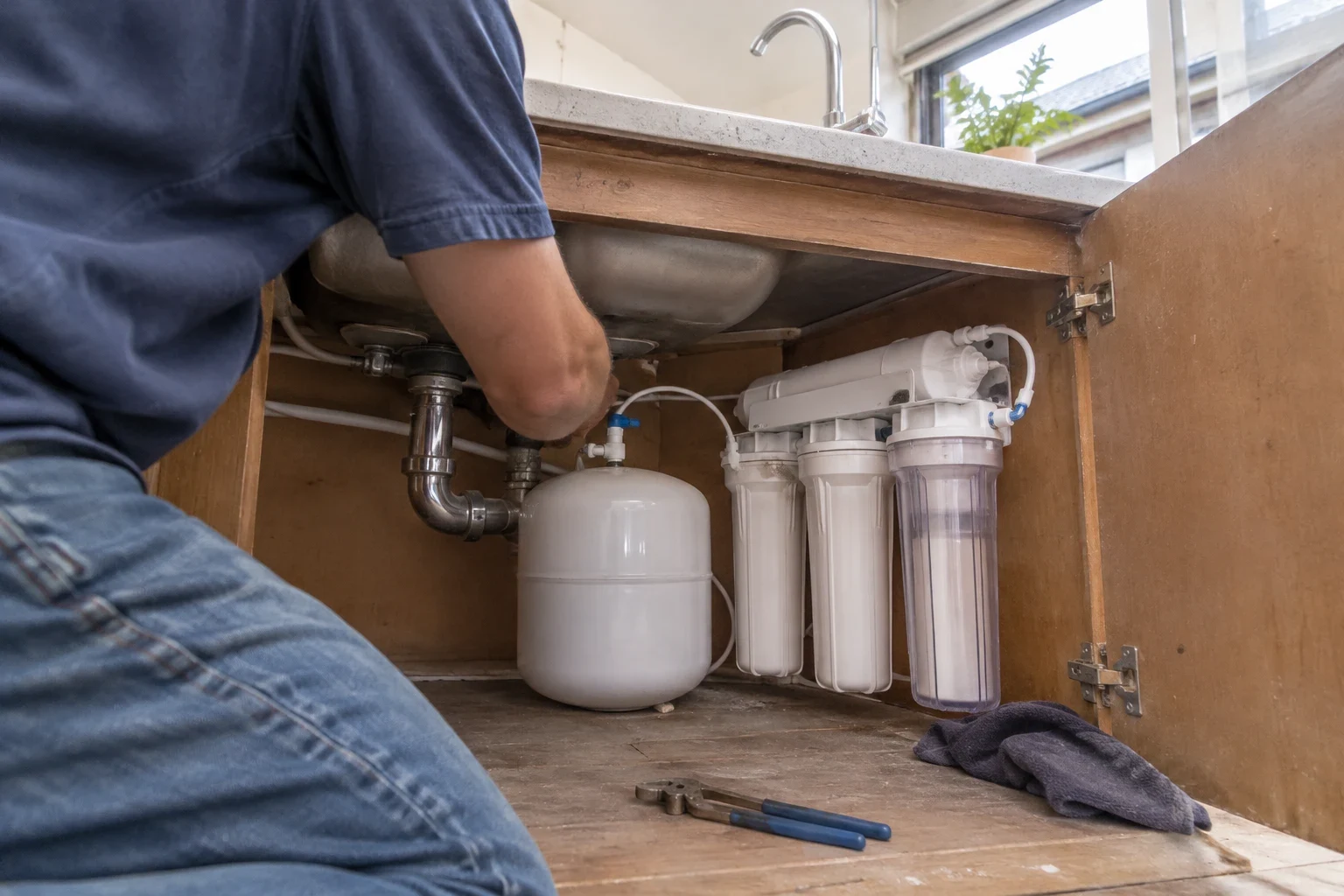
What reverse osmosis does at your kitchen sink
Reverse osmosis uses your water pressure to force tap water through a semi-permeable membrane. Water molecules pass. Most dissolved minerals, salts and many trace contaminants do not, and they are rinsed to the drain. A small pressurized tank stores the filtered water so it is ready when you open the faucet.
It is the right call when you care about the water you drink and cook with, not the water in your shower. If chlorine taste, white spots on glassware or older plumbing in your home has you buying bottled water, an RO unit under the sink usually solves it in one visit.
If you want every tap treated, our Whole Home Water Filtration page covers that option. Many homes pair the two.
What the install covers
Sediment and carbon prefilters
The first cartridge catches grit, rust flakes and bits of scale. Next, a carbon block removes chlorine, which keeps it away from the thin-film composite membrane, a material chlorine wears down over time.
The RO membrane
This is where most of the filtering takes place. We seat it in its housing, flush out the preservative it ships with and write down the install date so you can see when a new one is due.
Storage tank and shutoff valve
The tank holds an air bladder that pushes water out to your faucet. Once the tank is full, an automatic shutoff valve tells the membrane to stop, so the system does not keep sending water to the drain when there is no place to store it.
Dedicated faucet and drain air gap
The RO faucet is mounted in its own place on the sink deck or counter. A saddle fitting ties the reject line into the drain, and the line passes through an air gap, a physical break that keeps dirty drain water from being drawn back into the system.
Polishing filter
A final carbon cartridge after the tank takes away any flat or stale taste the water may pick up while it sits. It is the last thing the water passes through on the way to your glass.
Optional refrigerator line
For filtered water and ice at the fridge too, we can branch a line off the system and run it to your refrigerator, provided the cabinets leave a clean path for it.
Signs an RO system makes sense for you
You are hauling bottled water
Cases of water take up space and money every week. An RO faucet gives you the same use without the trips.
Chlorine taste in coffee and tea
Treated tap water can carry a pool-like note that shows up most in hot drinks. The carbon stages remove it before the membrane.
Spots and scale on kettles and glasses
Dissolved minerals leave white film when water evaporates. RO removes most of them from your drinking water.
Older pipes in your home
Aging fixtures and solder can add metals at the tap even when the supply leaving the utility is fine. Point-of-use RO filters right before you drink.
Taste changed after a main break or storm
Line repairs and heavy weather can stir up sediment and change how water tastes for a while. A system with a good sediment stage handles that better, and fresh prefilters help afterward.
How the install day runs
- 1
Look at the sink cabinet
We check space for the tank and filter housings, the cold-water shutoff, the drain tailpiece and your countertop material. Quartz and granite need a diamond bit for the faucet hole, so we confirm that first.
- 2
Check your water pressure
RO membranes work best around 40 to 60 psi. We put a gauge on a fixture, and if pressure is low we tell you whether a booster or permeate pump is worth adding.
- 3
Mount and connect
We fit a feed valve on the cold line, install the drain saddle, mount the faucet and set the housings so the cartridges are easy to reach later. Our crew are licensed plumbers in California, and connections are made to that standard.
- 4
Flush, fill and show you around
We flush the carbon and membrane, let the tank fill, check every fitting for drips and drain the first tank. Then we show you how filter changes work and which cartridge goes where.
What affects the cost of a reverse osmosis system
Your price comes down to the unit you pick and what your kitchen needs before it can run well. We walk through those pieces with you by phone, so the day of the install holds no surprises. Because we offer free install (we cover the cost), what you pay is for the equipment and any add-ons you choose.
- Stages and upgrades
- A standard four-stage system is the lower-cost option. Adding a remineralization cartridge, a UV lamp or a tankless design raises the equipment price.
- Countertop material and faucet
- If your sink already has an unused knockout hole, mounting the faucet is quick. Quartz or granite needs a diamond core bit and more care, and matching a specific faucet finish can change the part cost.
- Incoming water pressure
- When pressure at your home runs low, the membrane produces slowly. A booster or permeate pump fixes that, but it is an added component.
- Additional tubing runs
- Sending RO water to your refrigerator's ice maker, or to a wet bar or second sink, means more line, more connectors and more labor to route it neatly through cabinets or walls.
Common reverse osmosis questions
Something not covered here? (310) 388-3869
Does the system come with a warranty?
Yes. Each unit we install includes a free 3-year warranty. Should a covered part fail in those three years, we take care of it.
When do the cartridges need changing?
Sediment and carbon prefilters generally last 6 to 12 months, and less in a kitchen that gets heavy use. The membrane usually runs 2 to 3 years, but only if the prefilters are kept fresh. Once the carbon is used up, chlorine gets through to the membrane and wears it out ahead of schedule.
Is it true reverse osmosis wastes water?
Some water goes down the drain, taking with it whatever the membrane blocked. That rinsing stops the membrane from clogging. Good pressure and the automatic shutoff valve keep the amount sent to the drain reasonable.
Can I drink RO water during a boil-water notice?
No. Handle the RO faucet the same as any tap, and boil your water or drink bottled until the utility ends the notice. After that, drain the storage tank through the RO faucet and think about putting in new prefilters.
Is there room under my sink if I have a garbage disposal?
Usually, yes. The storage tank can be laid on its side or placed in the neighboring cabinet, and we run the drain connection around the disposal. We look at the layout before deciding where each piece goes.
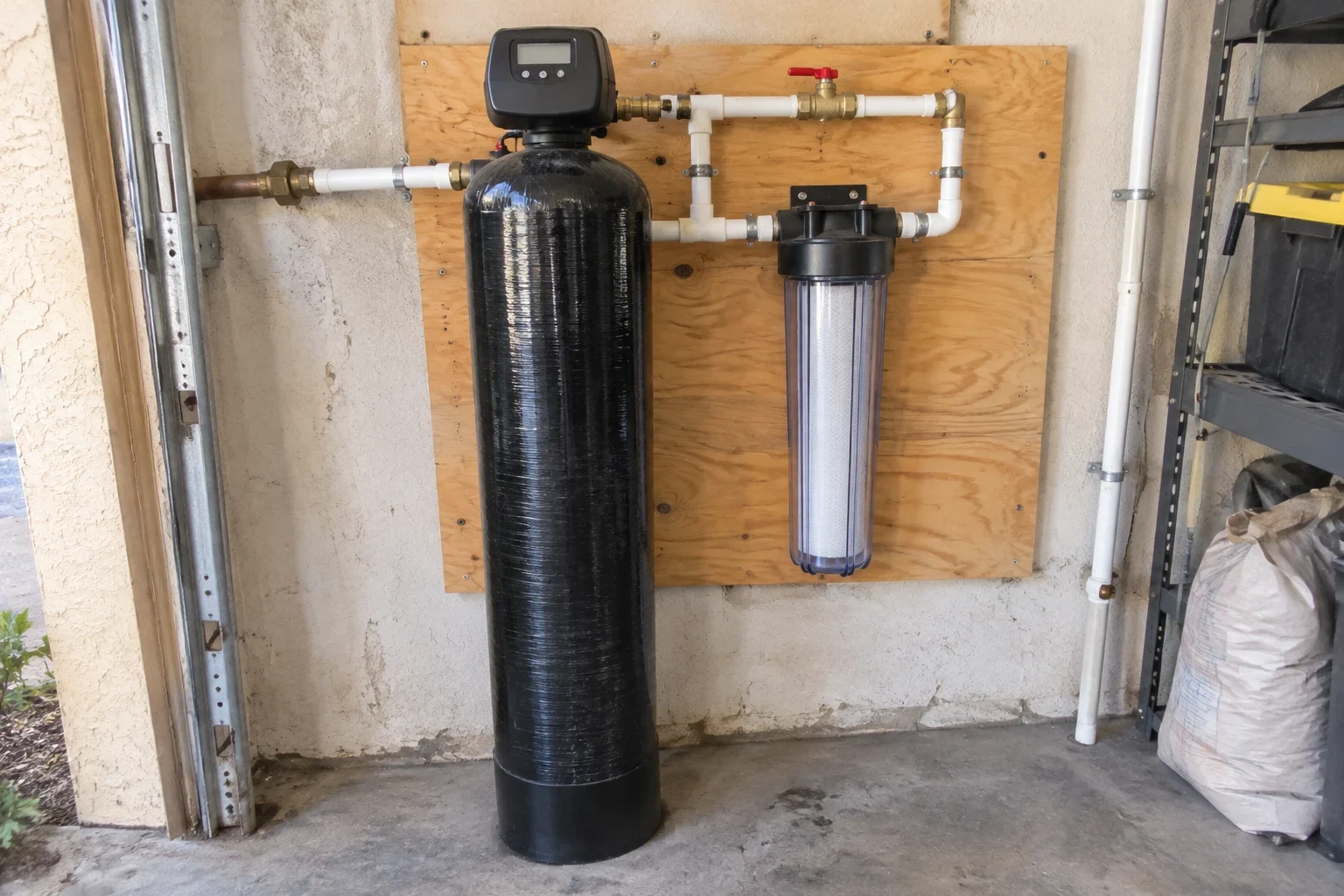
Get better drinking water at your kitchen sink
Tell us about your sink, countertop and what you want filtered. We will recommend a system that fits and explain the install before we schedule it.