ServicesWell Water Filtration
Well Water Filtration in Hermosa Beach
Private wells change with the weather. Heavy rain can push sediment, iron and odor into your water almost overnight. We size a filtration train to your pump's flow rate and plumb it in after the pressure tank, so every tap gets clean water without losing pressure.
What well water filtration does
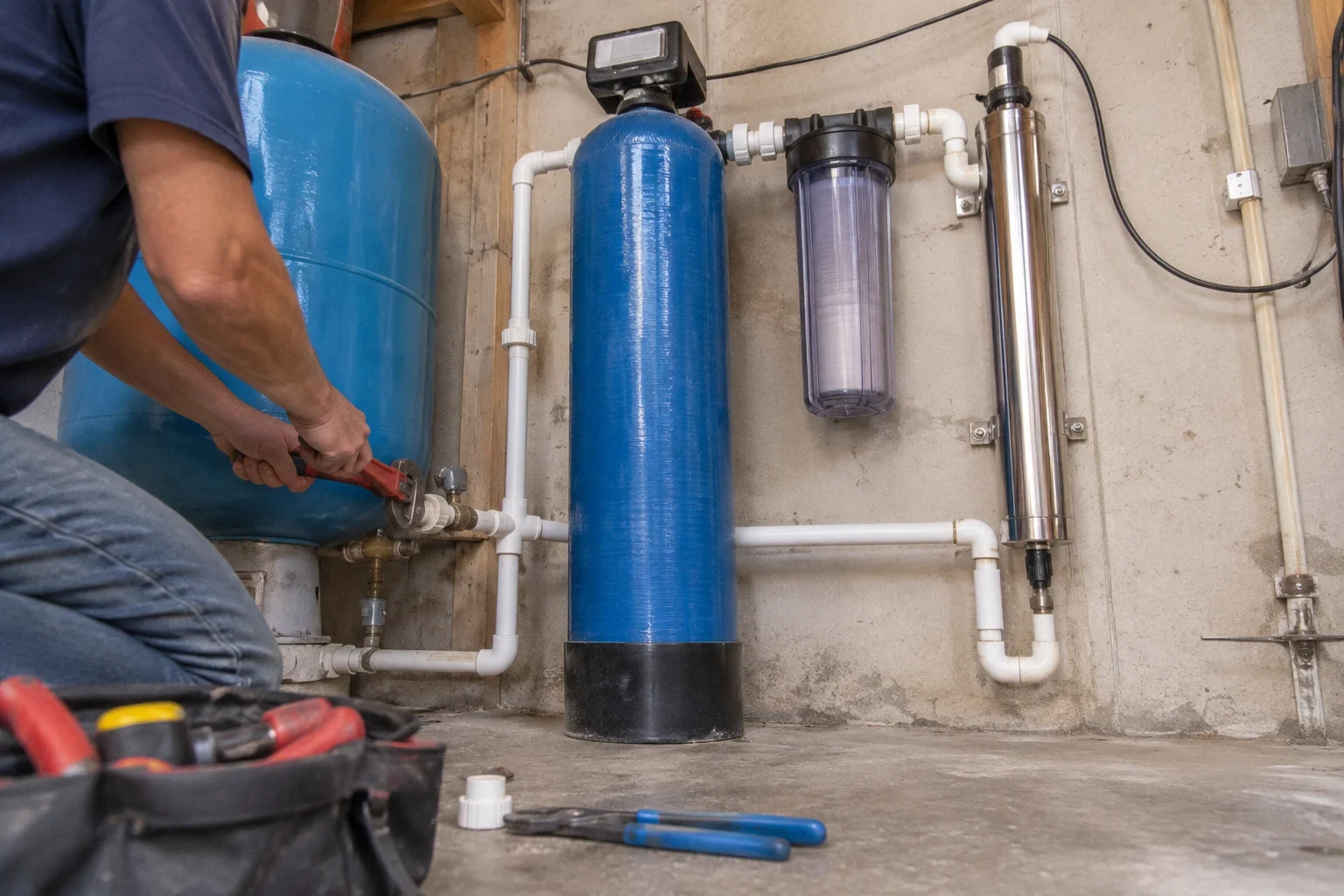
A city line arrives already treated. A well does not. Whatever the aquifer and the surrounding soil hold comes straight up the drop pipe: fine silt, dissolved iron and manganese, and sometimes hydrogen sulfide gas, the source of that rotten-egg smell. Each one needs a different stage, which is why one cartridge rarely solves a well problem.
We build the system in order. A sediment prefilter catches grit first, so it cannot foul the media further down. Next comes an oxidizing media tank. Iron and sulfur dissolved in water slip through any filter, so the tank converts them into solid flecks the media bed can hold, and the control valve periodically reverses flow to rinse that buildup down the drain. Where the wellhead is shallow or exposed to runoff, an ultraviolet unit goes last to deal with bacteria.
The work is done by licensed plumbers in California, and we tie in at the line between your pressure tank and the house, with a bypass valve so you can isolate the system for service.
What the installation includes
Sediment prefilter
A spun polypropylene or pleated cartridge in a clear or opaque housing, sized to your pipe. It protects the downstream media and shows you at a glance when grit is building up.
Iron and sulfur media tank
An air-injection or catalytic media tank with an automatic control valve. The valve backwashes on a schedule, flushing trapped iron and sulfur particles out through a drain line with a proper air gap.
UV disinfection, where it fits
A UV chamber with a quartz sleeve and lamp, installed after the other stages so clear water reaches the light. We recommend it when the wellhead or casing could take in surface water.
Bypass and isolation valves
Three valves around the system let you route water past it during a cartridge change or repair, so the house never has to go dry.
Startup and handoff
We purge air, run the first backwash, check pressure on both sides of the system and walk you through the cartridge change.
Signs your well needs filtration
Orange or brown stains
When dissolved iron hits air, it oxidizes and leaves a reddish ring at the toilet waterline and streaks under faucets. That color is the clearest clue your well carries iron.
Black specks or gray film
Manganese behaves like iron but leaves darker stains, often in the dishwasher and laundry.
Rotten-egg smell
Hydrogen sulfide gas is usually strongest on the hot side and right after the water has sat overnight.
Cloudy water after a storm
Heavy rain can raise the water table and stir silt into the well, or let runoff reach a poorly sealed casing. If the cloudiness lingers past a day or two, the well needs a sediment stage at minimum.
Grit in aerators
Sand and silt collect in faucet screens and wear out valve seats in toilets and appliances.
Pressure that keeps dropping
An undersized or clogged filter chokes flow. A properly sized system holds pressure between cartridge changes.
How the job runs
- 1
The phone call
You tell us what you are seeing, smelling or finding in the aerators, and anything a recent lab report showed. We ask about your pump, pressure tank and household size.
- 2
Looking at the equipment
We check the pressure tank, the pressure switch setting, pipe size and where a drain and an outlet are available. That decides the layout and whether the media tank can backwash properly.
- 3
Install day
We shut off the pump, drain the line and cut in the system after the pressure tank. Expect us for a morning or an afternoon rather than several days, and your taps go dry only during the stretch when we are joining pipe.
- 4
Startup and checks
We bring the pump back on, bleed air, run a full backwash and confirm the water clears. You get the maintenance schedule before we leave.
What moves the cost
Installation is part of our offer: free install (we cover the cost). The price comes down to the equipment your water calls for, which depends on what the well delivers and how your home uses it. When you get your quote by phone, we name each stage and explain why it belongs in the system.
- What is in the water
- Sediment alone needs one stage. Iron, manganese and sulfur together need an oxidizing media tank, and bacteria risk adds UV.
- Flow rate
- Media tanks are sized by gallons per minute. A larger household with several bathrooms needs a bigger tank to avoid a pressure drop.
- Drain and power access
- The control valve runs on a standard electrical outlet, and every backwash cycle has to discharge somewhere. If the nearest outlet or drain sits far from the tie-in point, the extra wiring or drain line adds material to the job.
- Existing plumbing condition
- Corroded fittings or an aging pressure tank near the tie-in point may need attention before new equipment goes on.
Well water filtration questions
Something not covered here? (310) 388-3869
My well water turned cloudy after heavy rain. What should I do first?
Switch to bottled water for drinking and cooking until you know the cause. Cloudiness after a storm often means silt or surface runoff, and runoff can carry bacteria. Have a lab check the well for bacteria before relying on it again. A sediment stage and UV unit help keep the problem from coming back.
Will a filtration system lower my water pressure?
A correctly sized one should not. Pressure loss usually comes from a media tank too small for the pump's flow or a sediment cartridge left in too long. We match the tank to your flow rate and show you when to change the cartridge.
What does the warranty cover?
Every unit we install comes with a free 3-year warranty. If a unit fails within that time, call us and we will sort it out.
What maintenance should I plan for?
Plan on swapping the sediment cartridge a few times a year, and check it sooner after a storm has churned up the well. The media tank flushes itself on its timer, so it needs little from you. If you have a UV unit, the lamp gets replaced roughly once a year, and that is a good time to wipe the quartz sleeve clean.
Should I add reverse osmosis too?
Well filtration treats every tap in the house. If you want extra polish on drinking and cooking water, an under-sink reverse osmosis unit after the well system is a sensible addition. The well stages also protect the RO membrane from iron and sediment.
Get clear water back from your well
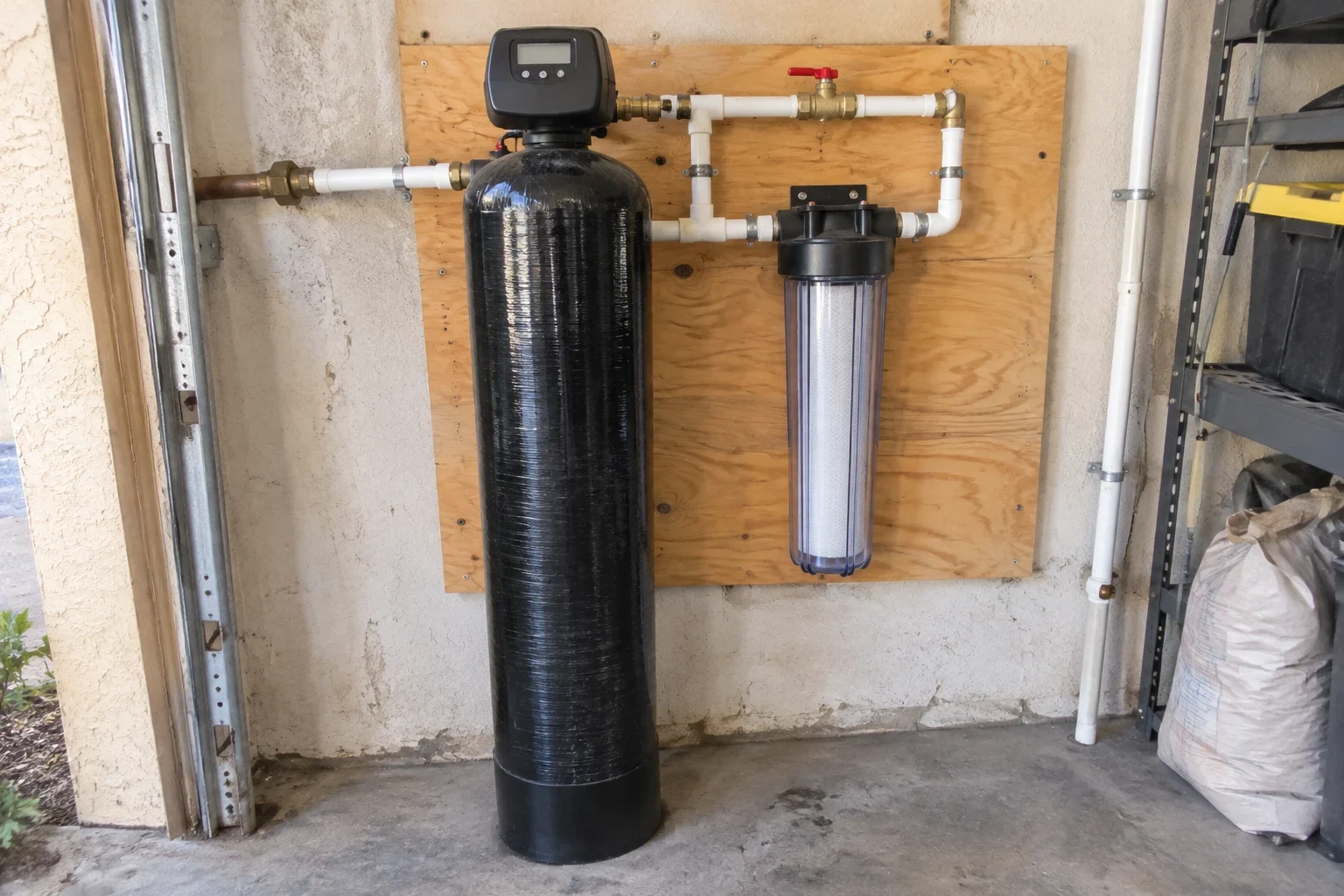
Tell us what your water is doing and what equipment sits at the wellhead. We will explain the stages it needs and what the system will cost.